

In this column: Judgement day, Twelve gates to the city (three in the east, three west, three south and three south), When the saints go marching in, Beulah Land, Outshine the sun, Hand writing on the wall, Snooky Pryor, Blind Boy Fuller, Barbecue Bob, Mavis Staples

Judgement Day
...
What you gonna do on judgement day
The time′s run out now, you can't stay
Screaming and crying, you got to go
Turn and say, "Peter won′t you open the door?"
...
An idea whereby every human that ever lived will be raised after death to be judged on account of: what he/she believed, and what he/she did with the talent and circumstances they were given in their mortal existence.
The outcome will result in Heaven or Hell.
Nonbelievers believe it is a way to keep church followers in line, bye scaring them about judgement day, which could be tomorrow.
Others believe it encourages people to live righteous lives.
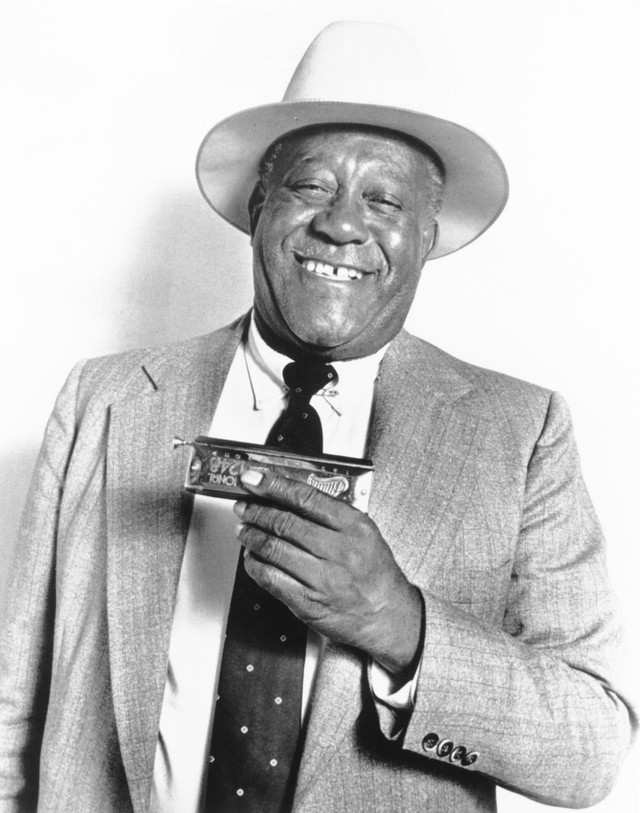
Snooky Pryor – Judgement Day (1991, New York City)
Twelve gates to the city
...
Hey Lord, what a beautiful city, hey God
Knows, what a beautiful city
Twelve gates in the city, hallelu
Yeah, there's three gates in the east, three gates in the west
Three gates in the south, three gates in the north, which it makes
Twelve gates in the city, hallelu, amen
...
Jacob, the grandson of Abraham, had 12 sons, all of whom established a tribe. These twelve tribes managed to escape slavery in Egypt and then enter the promised land.
The promised land, depicted here as a city, had three gates on the north (one for Reuben, one for Judah, one for Levi), three gates on the east (one for Joseph, one for Benjamin, one for Dan), three gates on the south (one for Simeon, one for Issachar, one for Zebulun), three gates on the west (one for Gad, one for Asher, one for Naphtali).
The idea here is that if they could escape slavery, we could too.

Blind Boy Fuller, Sonny Terry and Bull City Red (washboard)
When the saints go marching in
...
Oh, when the saints go marching in
Good Lord, I want to be in that number-huh
...
The saints in "When the saints go marching in" refer to the prayers of the saints. Prayers that glorify God, God hears the prayers of the righteous. That is not an elite that is holier than the rest. The saints are all people who believe in Jesus, living or dead, saved by grace through faith. And thus it refers to the Last Judgment.
The dead have already sealed their fate, for good or for evil. There is no post-mortem plan of salvation. Now is the day of salvation. After death, a person faces judgment, not further opportunity. God, whose word will stand and who will pronounce the final “Amen!” to the prayers of the saints

Barbecue Bob – When the saints go marching in
Beuluh Land, outshine the sun
...
Yes, come on, go over to Beulah Land, outshine the sun
Come on and go to Beulah Land, outshine the sun
...
"Beulah Land" is another name for heaven. This understanding is quite common among Christians. They interprets Israel, the Promised Land, Zion, etc., as heaven itself. “Crossing the Jordan” has become a symbol for death, which ushers one into the “Promised Land” of heaven.
Beulah Land (as seen in a dream): the pilgrims entered into the country of Beulah, whose air was very sweet and pleasant. Here they heard continually the singing of birds, and saw every day the flowers appear in the earth, and heard the voice of the turtle in the land. In this country the sun shines night and day: wherefore this was beyond the Valley of the Shadow of Death. Here they were within sight of the city they were going to, because it was upon the borders of heaven.
"Outshine the sun" reminds us that those who are wise shall shine as the brightness of the firmament. If you will come to Jesus you will outshine the sun.

Mississippi John Hurt – Bealah Land
Hand writing on the wall
...
Old Belshazzar got trouble in mind
Old Belshazzar got trouble in mind
Somebody read it, tell me what it said
Hand writing on the wall
"Go get Daniel", somebody said
"Go get Daniel", somebody said
"Go get Daniel", he will tell you what it said
Hand writing on the wall
...
The phrase "mene mene tekel uphars" appeared on a wall in the palace of Belshazzar, the acting king of Babylon.
The mysterious and frightening appearance of the phrase has given rise to the modern expression “the handwriting on the wall,” meaning “a portent or warning of inevitable misfortune.”
The story goes, that Belshazzar gives a banquet and uses stolen sacred vessels from a Jewish temple in a blasphemous manner. At the height of the party, a hand is seen writing a message on the wall. The whole thing looks ominous. However, no one knows what it means.
Until the prophet Daniel is called in. Daniel had been given the wisdom of God to interpret the words.
Daniel told the king: "Mene means, God has numbered the days of your reign and brought it to an end. Tekel means, you have been weighed on the scales and found wanting. Peres means, your kingdom is divided and given to the Medes and Persians”.
The handwriting on the wall proved true, the kingdom of Babylon was divided between the Medes and Persians, and it happened that very night.
The appearance of the phrase is a reminder that whatever we sow, that we will also reap. God is the Judge. It does not pay to ignore the “handwriting on the wall.”
