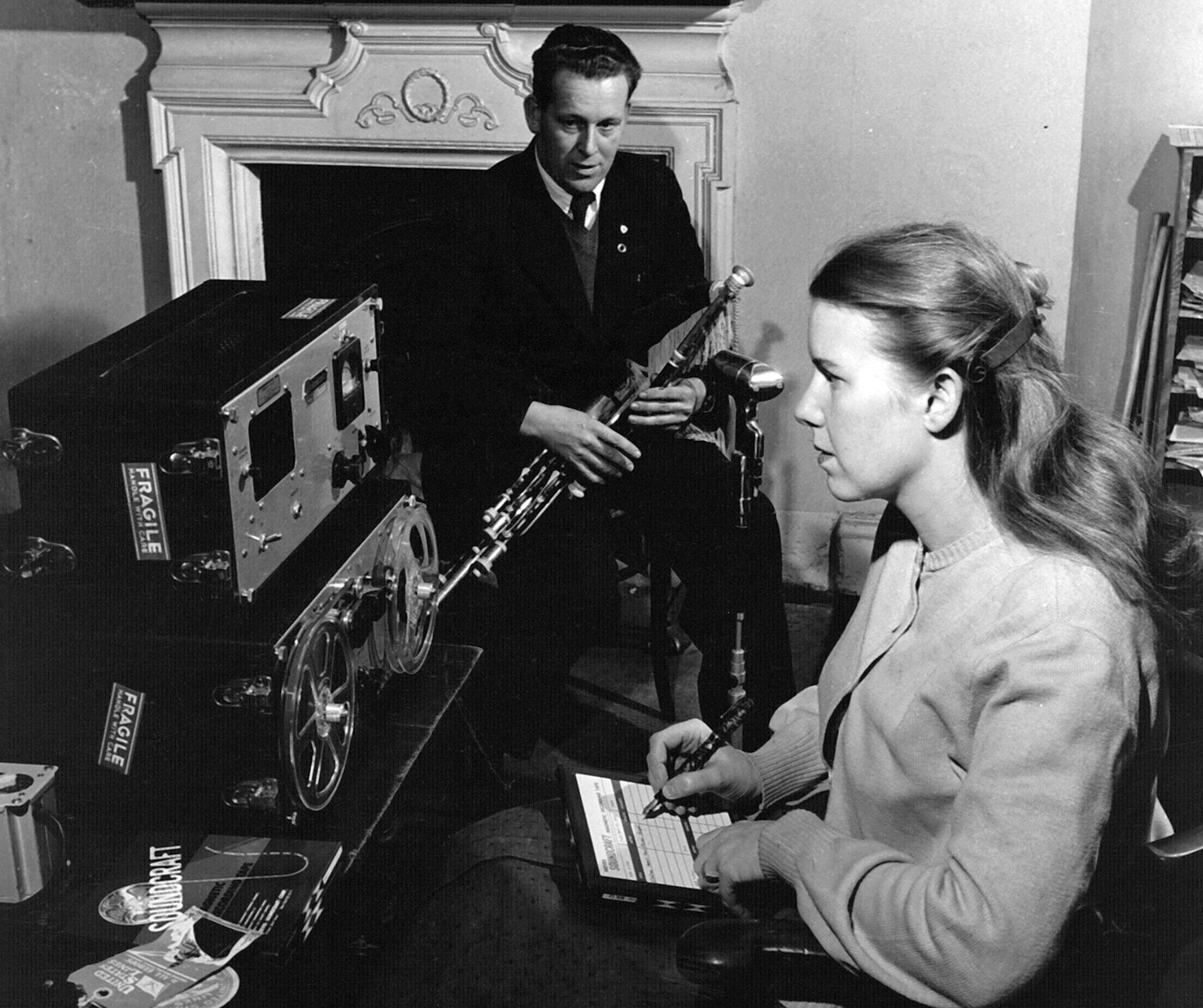
Ruby Tartt
Ruby Pickens Tartt was an American folklorist, writer, and painter who is known for her work helping to preserve Southern black culture by collecting the life histories, stories, lore, and songs of former slaves for the Works Progress Administration and the Library of Congress. In 1980 she was inducted into the Alabama Women's Hall of Fame.

In 1936, she was appointed chair of the WPA's (Works Progress Administration) local Federal Writers' Project (FWP) in Sumter County and began collecting the life histories, stories, lore, and songs of the area's former slaves. Her activities drew the attention of John Lomax and together they started an expedition collecting folk songs around Sumter County (they gathered over 300 songs).
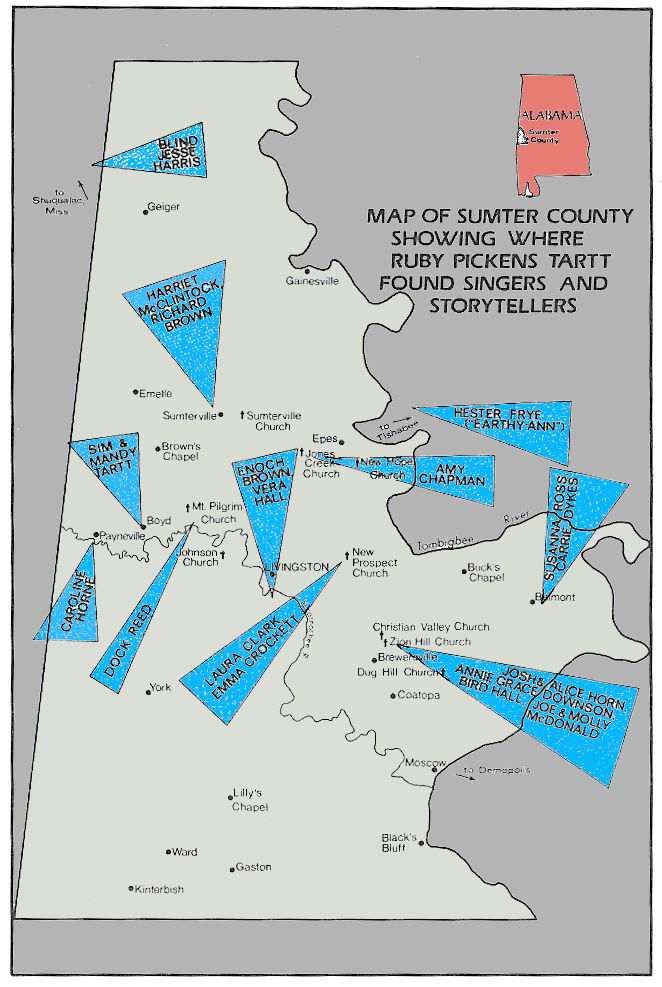
Tartt went on several further expeditions both on her own and with Lomax gathering more material for the LOC's (Library Of Congress) Archive of American Folk Songs. In 1939 and 1940, they collected recordings of over 800 songs and stories and over 80 photographs of singers. One of the singers Tartt recorded was Vera Hall, now considered one of the twentieth century's finest blues and folk singers.
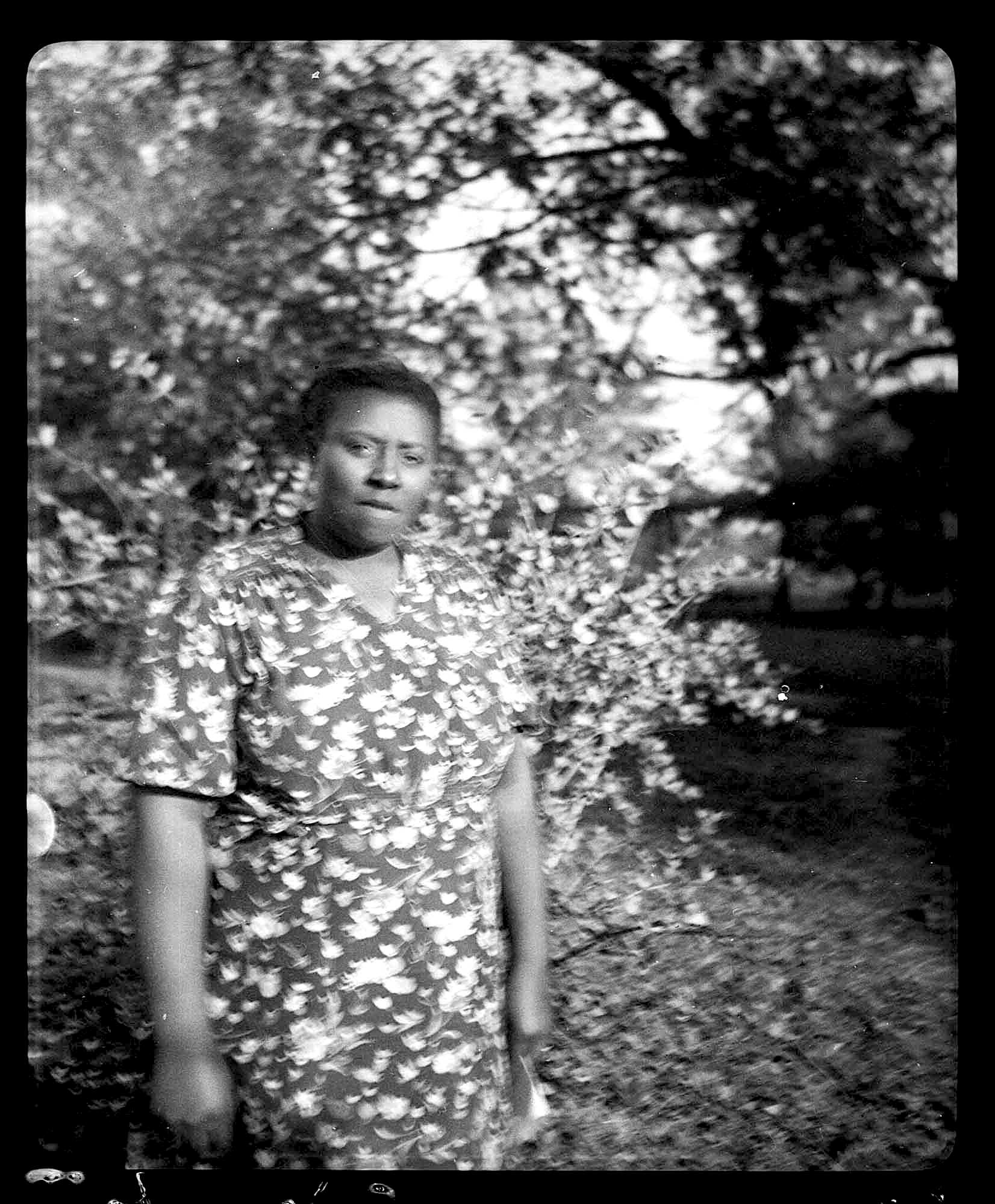
Tartt worked with Lomax and his son Alan on the folk music collections entitled Afro-American Spirituals, Work Songs, and Ballads and Afro-American Blues and Game Songs. Tartt also worked with folklorist Elie Siegmeister and with University of Alabama music professor Byron Arnold gathering material for his collection entitled Folksongs of Alabama, and she provided some material for poet Carl Sandburg's 1950 anthology New American Songbag.

Later in the 1950s, she joined forces with folklorist Harold Courlander, who was then working with Folkways Records. Their collaboration led to Sumter County singers being included in a half dozen early collections including Folk Music U.S.A., Negro Folk Music of Alabama, Negro Songs of Alabama, and Negro Folk Music U.S.A.
Ruby Terrill Lomax
Ruby Terrill Lomax was an American educator and folklorist, who worked with her husband John A. Lomax to collect American folk songs, campaigned for women's education, and was Dean of Women at University of Texas at Austin.
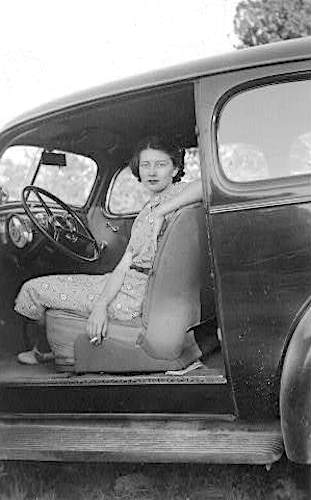
Ruby Terrill was an accomplished and progressive woman in her time. In 1929, she joined with eleven other Texas women educators to found the Delta Kappa Gamma Society International (society dedicated to position of women in education).
John and Ruby Lomax settled in Austin, where she taught at the university and took care of a number of duties for her husband's research, while he resumed collecting, lecturing, and meeting with publishers and funders.

In 1937 she fully focused on her husband's work and followed his passion for collecting songs. The Lomaxes moved to the "House in the Woods" outside Dallas, then drove away in her Plymouth on a scouting tour of the Southern states. It was Ruby Lomax's first trip in the capacity of "chauffeur, valet, buffer, machine operator, disk-jockey, body-guard, doctor and nurse, wife and companion," a role she would reprise on later occasions, including the 1939 Southern States Recording Trip.
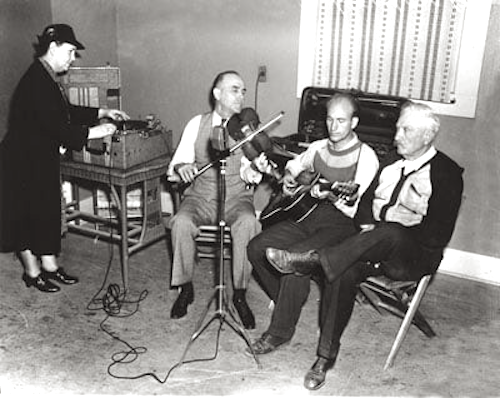
Ruby's contribution to the success of the trip was very great, nearly all written documentation relating to the collection was composed by her.
John emphasized: "In nearly every instance Miss Terrill is including typed copies of the words contained on each record; also the slang of the song and the singers. This will be a big saving for the Library. Writing down the words from the record playing is a long, tedious job."

Remark; John continued to call Ruby Miss Terrill throughout his marriage. He initially knew her as a student and babysitter for his children.
Bess Lomax Hawes
Bess Lomax Hawes was an American folk musician, folklorist, and researcher. She was the daughter of John Avery Lomax and Bess Bauman-Brown Lomax, and the sister of Alan Lomax and John Lomax Jr.

In the early 1940s she moved to New York City, where she was active on the folk scene. She was an on-and-off member of the Almanac Singers; she and a fellow Almanac singer, Baldwin "Butch" Hawes, an artist, were married in 1943. Another Almanac member, Woody Guthrie, taught her mandolin.

She moved to California (1950s), where she taught guitar, banjo, mandolin and folk singing. She also played at local clubs as well as at some of the larger folk festivals such as the Newport Folk Festival and the Berkeley Folk Festival.
In 1975, Hawes started working for the Smithsonian Institution, organizing the Smithsonian's Bicentennial Festival of Traditional Folk Arts. In 1977, she was named first director of the Folk and Traditional Arts Program at the National Endowment for the Arts, and created the National Heritage Fellowships, which recognize traditional artists and performers.

"We're really honoring traditions," Mrs. Hawes told The Washington Post in 1983. "These individuals are the people who've been pushed up by the traditions, they're the lightning rods that we grab onto. It's extremely important for the psychic health and well-being of Americans to maintain all of these little regional distinctions, to establish a cultural pluralism. It's like my brother folklorist Alan Lomax wrote one time: if the cultural gray-out continues around the world, pretty soon there will be no place worth visiting ... and no particular reason to stay home, either."
Video notes
Georgia Sea Island Singers feat. Bessie Jones
This program (1964) presents pure spirituals as they were sung during the 19th century on St. Simon's, an isolated island off the Georgia coast. Was made on the San Fernando Valley St. Coll. Campus. Songs include: Moses, Yonder Comes Day, Buzzard Lope (Throw Me Anywhere Lord), Adam in the Garden (Picking up Leaves), and Down in the Mire (Bright Star Shinning in Glory).
Singers are: John Davis, Emma Ramsay, Henry Morrison, Mabel Hillary, Bessie Jones.
Director: Bess Lomax Hawes - from archive.org
Buckdancer (1965, 6 min) – Featuring Panaloa County fife player Ed Young with Bessie Jones. Ed Young does the Buckdance, demonstrates making a fife, and plays a tune on the fife.
I haven't found any footage of this film, so here are two others that show "old time dancing".
Bessie Jones (Georgia Sea Island Singers), lead vocal, with Nat Rahmings, drum; Hobart Smith, banjo; Ed Young, fife; and John Davis, Henry Morrison, Albert Ramsay, and Emma Ramsay, vocals.
Remark on YouTube; Buck dancing, Clogging and flatfooting was brought over to TN, VA, NC & Ky by our ancestors from the Scottish-Irish in the 1700s. Our Ancestors would dance this and the Slaves pick up on it and they danced too as the music played from the Big house. Old Time Bluegrass came over with the dancing.
Pizza Pizza Daddy-O (1967, 18 min) – looks at continuity and change in girl's playground games at a Los Angeles school. This footage is 1:32 min
Say Old Man - Can You Play The Fiddle? (1970, 20 min) – Virtuoso fiddler Earl Collins, born in Shawnee, Oklahoma, moved to Southern California in the Depression. He plays Say Old Man Can You Play the Fiddle, Dry and Dusty, Sally Goodin, Bull at the Wagon, Black Mountain Rag, and Billy in the Low Ground.
This footage is 3:22 min
Denise Duffy
Music Maker Relief Foundation was founded in 1994 by Tim and Denise Duffy to "help the true pioneers and forgotten heroes of Southern music gain recognition and meet their day-to-day needs. Music Maker presents these musical traditions to the world so American culture will flourish and be preserved for future generations."

Music Maker has been vital in promoting the voices of America's most important vanishing musicians who play blues, string band, gospel, Native American, and other southern traditions. "The music industry was built on the backs of these artists," Duffy says. In the past years, Music Maker has provided services and grants to over 250 musicians.
Cathy Mitchell
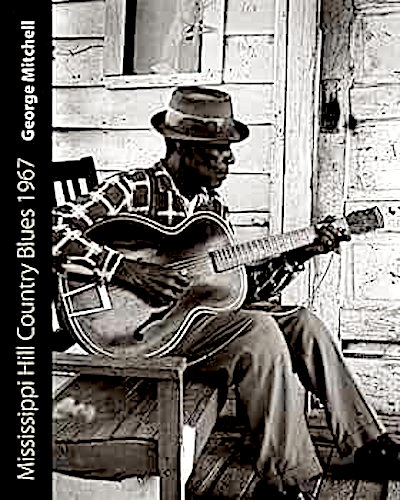
Cathy made field recordings together with her husband George Mitchell. Cathy was indispensable during their trips, because they wanted to capture not only the sound but also the images and the stories.

In 1967 George and Cathy Mitchell spent the summer in Mississippi and 13 days of the trip were spent in the hill country with some of the finest musicians from the area. Mitchell was welcomed into the homes of many of the musicians and was able to spend time with them and as well as their family and friends. He went to dinner in their homes, rent parties, and fife and drum picnics with the musicians posing for portraits and telling him stories. This book, Mississippi Hill Country Blues 1967, documents this time. (Lemuriablog.com)
Video notes
Content (remark Stefan Wirz):
- Crawling Kingsnake - Earl Bell (0:00)
- Rocky Mountain - Earl Bell (3:10)
- Telephone Ringing - Abe McNeil (6:40) [sic! not Earl Bell!]
- Vicksburg Blues - Earl Bell (11:05)
Ann Charters
Ann Charters Danberg is Professor Emerita of American Literature at the University of Connecticut at Storrs. She is a Jack Kerouac and Beat Generation scholar.
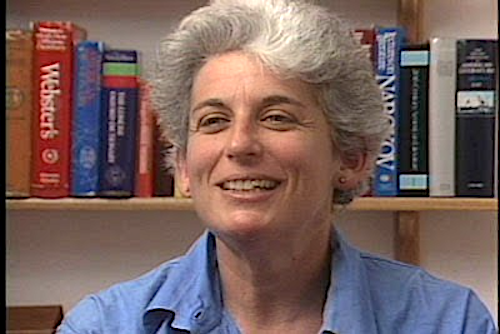
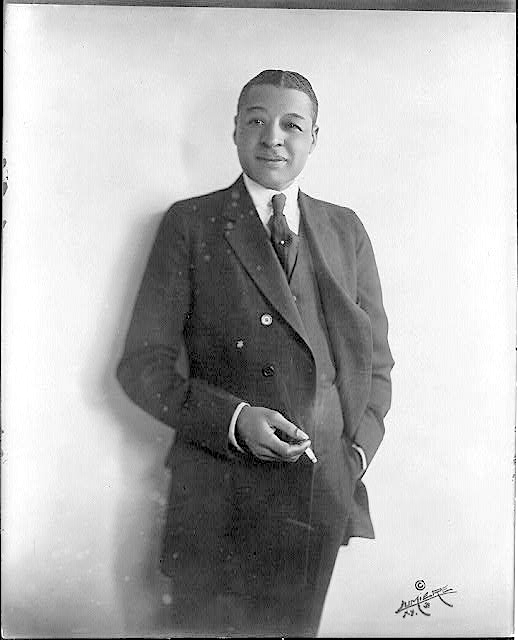
She has written a literary study of Charles Olson and biographies of black entertainer Bert Williams (with her husband Samuel Charters) and the Russian poet Vladimir Mayakovsky.

She was the general editor of the two volume encyclopedia The Beats: Literary Bohemians in Postwar America. She is also the editor of numerous volumes on Beat and 1960s American literature, including The Portable Beat Reader.
Ann published a collection of her photographic portraits of well-known writers in the book Beats & Company.




Jean Ritchie
Jean Ruth Ritchie was an American folk singer, songwriter, and Appalachian dulcimer player, called by some the "Mother of Folk". In her youth she learned hundreds of folk songs in the traditional way (orally, from her family and community), many of which were Appalachian variants of centuries old British and Irish songs, including dozens of Child Ballads.

In 1949 and 1950, she recorded several hours of songs, stories, and oral history for Lomax in New York City. All of Lomax's recordings of Ritchie are available online courtesy of the Lomax Digital Archive. She was recorded extensively for the Library of Congress in 1951.
In 1952, Ritchie was awarded a Fulbright scholarship to trace the links between American ballads and the songs from England, Scotland and Ireland. As a song-collector, she began by setting down the 300 songs that she already knew from her mother's knee. Then, Ritchie and her husband, George Pickow, spent 18 months tape recording, interviewing and photographing singers.
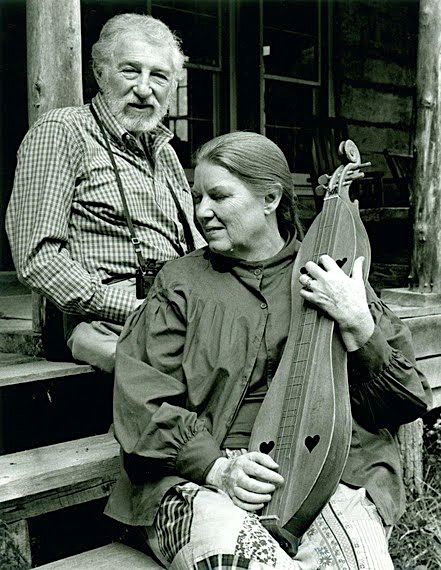
In 1954, Ritchie released some of the British and Irish recordings on the album Field Trip, side by side with Ritchie family versions of the same songs; a broader selection was issued by Folkways on the two LPs Field Trip–England (1959) and As I Roved Out (Field Trip–Ireland) (1960).


Some transcriptions and photographs were later published in Ritchie's book From Fair to Fair: Folksongs of the British Isles (1966).